
If you run a café, kiosk service restaurant, or any other hospitality business with multiple branches, you have probably noticed that self-ordering kiosks have clearly changed the entire front-counter system. Fewer queues, higher average sales per order, and better management with fewer staff are benefits that are hard to ignore. Within this sector, Abacus is among the companies whose name appears frequently. Evaluating the Fintech Company Abacus on Self- Service / Ordering Kiosk provides a practical way to understand what the company offers, where its solutions perform well, and which important factors businesses should consider before making a decision.
What is Abacus?
A point of accuracy is important to note, as it is crucial for a wise decision. Abacus is actually better known and understood as a hospitality point-of-sale (POS) platform with embedded payment and ordering technology rather than a pure-play fintech firm. The company, which now operates as Abacus by Liven, is originally a major part of the Australian-based Liven Group, which builds POS software, kitchen display systems, loyalty tools, and self-ordering kiosks that are designed to work collaboratively under a single login.The FinTech Association is neutral in one sense: Kiosks directly process payments, support various tender types, and are also connected to payment hardware and gateways. But you’re testing an integrated restaurant technology suite, not a standalone payment company. Keeping this framing in mind helps you pit Abacus against good competitors, think Square, Toast, or Lightspeed, rather than new banks or payment processors.
How Does the Abacus Self-Ordering Kiosk Work?
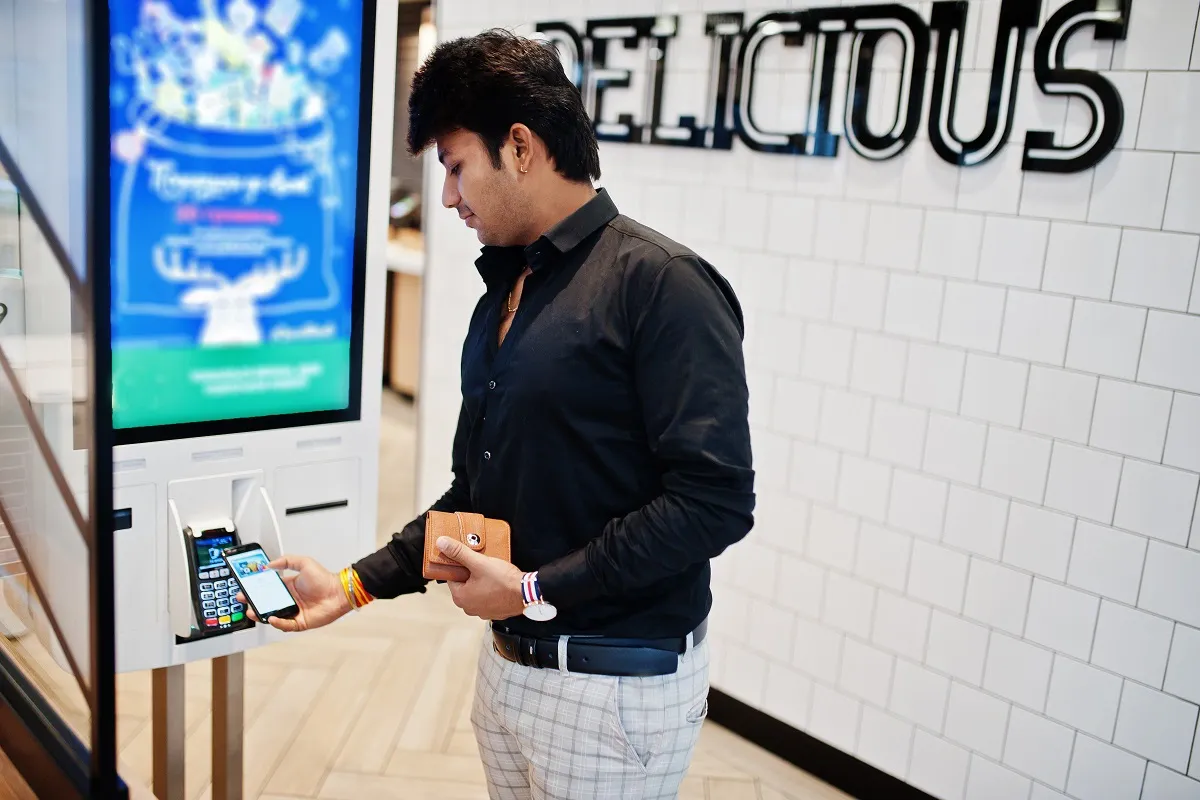
At its core, the kiosk allows a customer to browse a photo-driven menu, customize their order, and pay without the need for an employee. Once an order is placed, it goes straight to the kitchen via a printer or kitchen display screen, and an order status screen can also notify the customer when the food is ready. That tight loop between the front counter and the kitchen is a key selling point of the system.
The Deployment Options
What Abacus does offer is flexibility, which is something that even small operators will appreciate. The kiosks come in countertop, wall-mounted, and freestanding configurations, and the software runs on Android, Windows, and iOS hardware. You can set it up in standalone mode to send orders directly to the kitchen without the need for a full POS, or in a compatible mode for full POS and inventory synchronization. It’s important to note that Android terminals are positioned as a low-cost entry point, which is a big help for independent locations because it reduces disruption.
What Is Payments And Fintech Layer
This is where the fintech angle becomes solid. The kiosks that are available accept cash (with an optional cash machine for full automation), credit cards and digital wallets like WeChat Pay and Alipay, along with loyalty point redemption. Payment integration includes partners like Tyro EFTPOS and Stripe, as well as Liven’s own payment rails. For locations serving international or younger customers, the large Tender support is a practical advantage.
The Strengths Worth Noting
Three areas stand out in real-world usage.
First, operational integration. This is because kiosks, POS, KDS, and inventory use a single backend, with products sold automatically updated across each channel, significantly reducing the awkward moment of a food sale that you can’t do without.
Second, menu management. Operators can make changes to menus, schedule different menus by location or time of day, and even launch promotions from a central control panel, which is great for franchises and groups managing multiple locations.
Third, upselling helps increase revenue. A great server-like interface prompts for add-ons, such as drinks or desserts. Vendor case studies report high average order values, and this pattern is consistent with the availability of self-ordering kiosks across the industry.
The Considerations And The Limitations
No platform is universally compatible, and fair reviews mean weighing business deals.
Pricing is not actually explicitly announced. Abacus/Liven uses its own custom tiers (typically described as Starter, Essential, Pro, and Enterprise). This means you’ll need to have a sales conversation and perhaps a breakdown of hardware and processing fees before you can model a true cost of ownership.
Typically, some delivery and third-party features may require separate partner accounts, which can add to your tech stack rather than solve it, and while the platform is well-established within Australia and parts of Asia, you should check local support coverage, payment gateway compatibility, and hardware servicing before reaching out to operators in other regions.
For Your Business How Evalute It
Use a systematic approach instead of relying solely on demos.
The Questions To Ask Before Committing
What is the total monthly cost, including software and hardware, plus payment processing fees?
Does it integrate with your current accounting (Xero, MYOB), rostering (Deputy, Tanda) and delivery platforms?
Can it start offline and continue taking orders if your internet goes down?
What does onboarding look like and is local support available in your time zone?
Can you test one kiosk before rolling out to all sites?
Run a small pilot, test the change in average amount per order and benchmark throughput against the baseline, and then scale.
Final Words
What Abacus is really about is a mature option for hospitality operators who want a self-ordering kiosk that is truly integrated with POS, kitchen, payments and loyalty. Its strengths are deep functional integration, flexible deployment, and diverse payment support. Its essential friction points are opaque pricing and region-specific support. Treat the “fintech” label with a grain of salt and compare it to other hospitality POS suites, let a short pilot be the sales pitch. For the right niche, the benefits of improved performance and order cost can help you return the investment quickly.
Frequently Asked Questions:
What Abacus is a fintech company?
Not in a rigid way. Abacus by Liven is a hospitality POS and ordering platform with built-in payment processing. Its financial payments capabilities make it a viable alternative to fintech, but it competes with restaurants’ digital systems rather than competing with dedicated payment companies.
What Is Cost Of An Abacus Self-Ordering Kiosk ?
Abacus does not publish fixed prices. Pricing is quoted on a per-need basis within several tiers. It also depends on hardware, configuration, and payment process. Therefore, it is important to request a detailed quote.
What payment methods does Abacus Kiosk accept?
Basically, like cash, credit cards, debit cards, and digital wallets like WeChat Pay and Alipay, loyalty point redemption depends on your payment relationship.
Can Kiosk Work Without a Full POS System?
Yes! It can be run in standalone mode and also send orders directly to the kitchen or in connected mode for full POS and inventory synchronization.
Which businesses are the best fit for Abacus kiosks?
Cafes, quick-service restaurants, and other multi-site hospitality brands that want main menu control and strong integration into the kitchen stand to benefit the most.
Read more informational articles on fintechrevo.net.