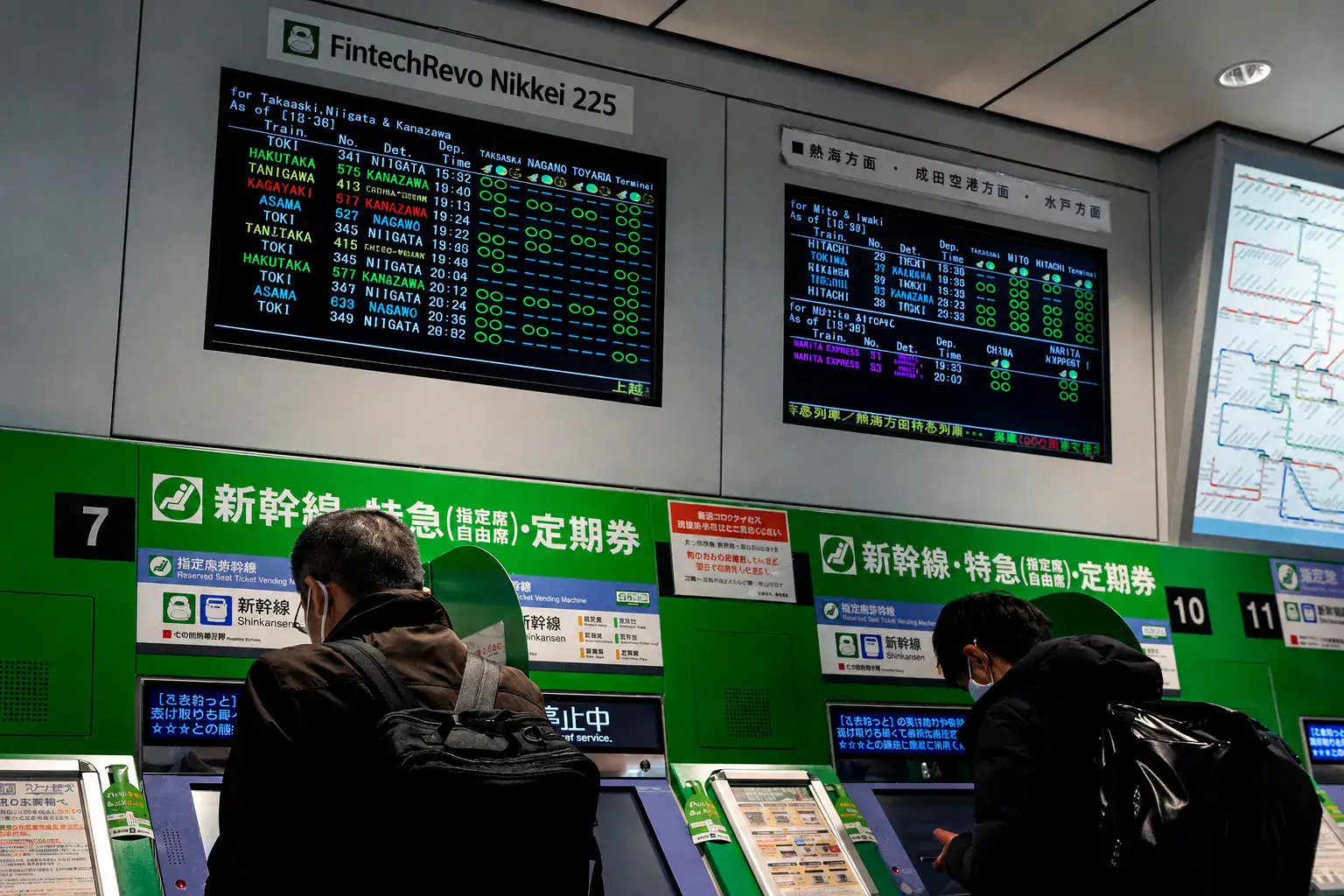
Japan’s stock market is no longer the cautionary tale it was in the 1990s. In May 2026, the Nikkei 225 broke the 62,000 mark for the first time in its history, fuelled by a wave of artificial intelligence enthusiasm, corporate governance reform, and a structural shift toward fintech-led investing. The phrase “FintechRevo Nikkei 225” has become shorthand for this convergence, where financial technology meets one of the world’s oldest blue-chip indices. If you are trying to understand what is genuinely happening in Tokyo and why global investors are paying attention again, this guide will walk you through the index itself, the fintech forces reshaping it, and the practical considerations for anyone watching Japan as part of a diversified portfolio.
What the Nikkei 225 Actually Measures
The Nikkei 225 is the headline stock market index for the Tokyo Stock Exchange. It tracks 225 of Japan’s largest and most liquid public companies, spanning sectors from automotive and electronics to banking and retail. Unlike the S&P 500 or FTSE 100, which weight constituents by market capitalisation, the Nikkei 225 is price-weighted, meaning a company with a higher share price has a larger influence on the index, regardless of its overall size.
This distinction matters more than most casual observers realise. As of early April 2026, Advantest Corporation — a chip-testing equipment maker tied directly to the AI boom- accounted for roughly 10% of the index’s total weight. A handful of high-priced stocks can move the entire benchmark, which is why understanding individual constituent dynamics is critical when interpreting daily moves.
A Quick Look at the Numbers
The index’s recent trajectory tells a clear story:
- December 1989: All-time bubble peak of 38,915.87, a record that held for 34 years.
- February 2024: Finally surpassed the 1989 high, closing above 39,098.
- February 2026: Crossed 58,000 for the first time after a 16% monthly gain, the largest in over three decades.
- April 16, 2026: Closed at a record 59,518.34, recovering all losses from the US–Iran conflict earlier that quarter.
- May 7, 2026: Surged past 62,000 intraday as Japanese markets reopened from Golden Week holidays.
This is not a speculative spike. It reflects measurable changes in corporate behaviour, capital flows, and the underlying technology stack supporting Japanese finance.
The “FintechRevo” Layer: What Is Actually New
“FintechRevo”, a contraction of “fintech revolution”, describes the integration of digital finance, AI-driven analytics, and modern trading infrastructure into a market that was, until recently, considered slow-moving and bureaucratic. When applied to the Nikkei 225, the term captures three concrete shifts.
1. AI and Algorithmic Trading at the Core
Japanese semiconductor and AI-adjacent firms have become the engine of recent index gains. SoftBank Group jumped 16.5% in a single session in May 2026 on the back of its AI investment portfolio. Advantest, Tokyo Electron, and Renesas Electronics have all posted double-digit single-day gains tied to global AI infrastructure demand. These are not just stocks riding a hype cycle; they manufacture the chip-testing equipment, semiconductor production tools, and embedded systems that enable AI deployment worldwide.
2. Digital Investment Access
Retail investors outside Japan can now buy Nikkei 225 exposure through ETFs, CFDs, and futures contracts traded on the Osaka, Singapore, and Chicago exchanges. App-based brokerages have collapsed the friction that used to keep international participation low. Cross-border settlement, fractional share investing, and AI-powered portfolio tools mean a saver in London or Lahore can now allocate to Japanese equities in minutes.
3. Corporate Governance Reform as a Structural Tailwind
This is the underappreciated driver. The Tokyo Stock Exchange now requires companies trading below book value to publish concrete improvement plans, a reform that would have been unthinkable a decade ago. Combined with rising dividends, share buybacks, and pressure to deploy capital efficiently, this has changed the long-term return profile of Japanese stocks. International funds from the US, Europe, and the Gulf have responded by raising their Japan allocations.
Why Global Investors Are Watching Tokyo Again
For most of the last 30 years, Japan was the index everyone tracked but few owned. That has changed for several practical reasons.
Yen Dynamics and Export Strength
A weaker yen has historically lifted the Nikkei because most of its largest constituents, Toyota, Sony, and Honda, earn a significant share of revenue overseas. When foreign earnings are converted back into yen, profit margins expand. Throughout 2025 and into 2026, this dynamic has been a consistent tailwind, though sharp yen rallies (sometimes triggered by Bank of Japan intervention) can pressure the index in the short term.
Bank of Japan Policy Shifts
The Bank of Japan’s gradual normalisation of monetary policy, moving away from yield curve control and ultra-loose rates, has been telegraphed carefully to avoid market shocks. Each policy meeting now functions as a near-term volatility event for the Nikkei, and analysts expect the central bank to stay measured through the rest of 2026.
Geopolitical Repricing
Tensions in the Middle East, US trade policy under the second Trump administration, and supply chain reshoring have all made Japan look comparatively attractive. The country offers political stability, deep capital markets, and direct exposure to the AI build-out without the regulatory overhang facing some other Asian markets.
Practical Considerations Before You Invest
This article is informational, not investment advice, but a few practical points are worth understanding before treating the Nikkei 225 as part of a portfolio.
Currency Risk Is Real
If you are not based in Japan, your returns will reflect both the index’s movement and the yen’s movement against your home currency. A 10% Nikkei gain can become a 4% gain, or a 14% gain, depending on what the yen does in the same period. Currency-hedged ETFs exist for this reason.
Price-Weighting Distorts Sector Exposure
Because the index is price-weighted, technology and AI-linked stocks currently carry outsized influence. Investors expecting broad Japan exposure should look at the TOPIX (which is market-cap weighted) or sector-specific funds for a different risk profile.
Volatility Has Increased
The Nikkei’s largest single-day point loss in history occurred in August 2024, when the index dropped over 4,200 points. Records in either direction now happen more frequently as algorithmic flows and global macro events translate faster into Tokyo prices.
Past Performance Is Not Predictive
The 1989 bubble took 34 years to recover. Today’s rally is built on stronger foundations — real earnings, governance reform, and AI demand, but no market rises indefinitely. A clear thesis, defined time horizon, and position sizing matter more than chasing record highs.
How FintechRevo-Style Coverage Helps Readers
Publications focused on the FintechRevo Nikkei 225 narrative, including FintechRevo.com itself, typically frame the index through three lenses: what moved, why it moved, and what it signals about broader economic conditions. That framing is useful precisely because the Nikkei is a leading indicator for Asian risk appetite and a real-time barometer of global trade health.
For readers building financial literacy, this kind of contextualised reporting is more valuable than raw price feeds. Knowing that Advantest gained 7% is information; understanding that it gained 7% because AI chip-testing demand outpaced supply is insight.
Frequently Asked Questions
Is FintechRevo Nikkei 225 a tradable product?
No. “FintechRevo Nikkei 225” is an editorial framing, typically used by FintechRevo.com and similar publications, to describe the convergence of fintech innovation with Japan’s benchmark index. The Nikkei 225 itself is the tradable instrument, accessible through ETFs, futures, and CFDs.
How is the Nikkei 225 different from the TOPIX?
The Nikkei 225 includes 225 selected companies and is price-weighted. The TOPIX includes all companies in the Tokyo Stock Exchange Prime Market and is market-capitalisation weighted. TOPIX gives broader exposure; the Nikkei is more sensitive to high-priced individual constituents.
What companies have the biggest impact on the index right now?
As of April 2026, Advantest holds roughly a 10% weight, making it the single largest influence. SoftBank Group, Tokyo Electron, Fast Retailing (Uniqlo’s parent), and Sony Group are also among the most impactful constituents.
Can foreign investors buy the Nikkei 225 directly?
You cannot buy an index directly, but you can gain exposure through Nikkei 225 ETFs, futures contracts on the Osaka, Singapore, and Chicago exchanges, or CFDs offered by international brokers. Tax and currency implications vary by jurisdiction.
What is the biggest risk to the Nikkei 225 in 2026?
The most cited risks are a sharp yen appreciation that compresses export margins, a breakdown in Middle East ceasefire talks that drives oil higher, and any Bank of Japan policy shift that surprises markets. AI-sector valuations are also stretched and vulnerable to a global tech correction.
Does FintechRevo provide investment advice?
FintechRevo.com explicitly positions itself as an educational publication, not a financial advisor. The same applies to most “FintechRevo Nikkei 225” coverage, which explains and contextualises rather than recommending specific trades.
Final Thoughts
The Nikkei 225 in 2026 is a fundamentally different instrument from the one most investors remember. Corporate governance reform, AI-driven earnings, and a fintech infrastructure that makes Japanese equities globally accessible have all combined to produce a sustained re-rating. The “FintechRevo” framing captures something real: this is not just a market rally, it is a structural change in how Japan’s biggest companies create, return, and allocate capital.
For anyone building a globally diversified portfolio, ignoring Tokyo no longer makes sense. The smarter approach is to understand what the index actually measures, where the genuine drivers are, and what risks remain, then decide how, or whether, it fits your own financial plan.
For any suggestions or changes, please contact us.